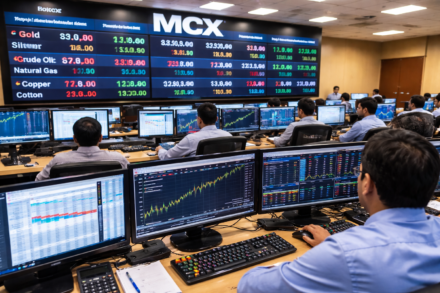


A Complete Guide for MCX Commodity Trading and Stock Markets
Financial markets operate on standardized rules that ensure transparency, efficiency, and uniform participation. Two of the most fundamental structural concepts in both commodity trading and stock trading are lot size and tick size. These terms determine how trades are executed, how prices move, and how contracts are structured across exchanges.
In India, where MCX commodity trading plays a central role in commodity derivatives markets, understanding lot size and tick size is essential for interpreting price movements, contract value, and market data. These concepts influence everything from trade sizing and liquidity to price volatility and settlement.
This article provides a detailed, research-driven explanation of lot size and tick size, how they work in commodity trading in India, and how they compare with stock trading structures. The goal is to clarify market mechanics in an educational and informational manner.
What Is MCX?
The Multi Commodity Exchange of India (MCX) is India’s leading commodity derivatives exchange. It provides an electronic trading platform for futures and options contracts in commodities such as:
- Gold
- Silver
- Crude oil
- Natural gas
- Copper
- Zinc
- Aluminium
MCX operates under the regulatory supervision of SEBI and facilitates price discovery, risk management, and trading access for participants across the country.
Understanding Standardization in Trading
Both commodity and stock markets rely on standardization to maintain order and transparency. Standardization ensures that:
- All contracts have defined quantities
- Price movement increments are fixed
- Settlement processes are predictable
Two key elements of this standardization are:
- Lot size – the quantity per contract
- Tick size – the minimum price movement
These elements form the foundation of contract structure.
What Is Lot Size?
Definition
Lot size refers to the fixed quantity of an asset represented by one contract or trading unit. In commodity futures, each contract corresponds to a specific amount of the underlying commodity.
For example:
- A gold futures contract may represent 1 kilogram
- A crude oil contract may represent 100 barrels
This means trades occur in multiples of the defined lot size.
Why Lot Size Exists
Lot size ensures consistency across the market. Without standardization, each trade could involve different quantities, leading to inefficiency and confusion.
Key purposes of lot size:
- Standardized trading units
- Efficient price discovery
- Simplified clearing and settlement
- Uniform contract valuation
Lot size also influences contract value and margin requirements.
Lot Size in MCX Commodity Trading
Each commodity on MCX has predefined contract specifications. These include:
- Lot size
- Tick size
- Expiry date
- Margin requirements
Example MCX Lot Sizes
| Commodity | Typical Contract Lot Size* |
|---|---|
| Gold | 1 kg |
| Gold Mini | 100 grams |
| Silver | 30 kg |
| Crude Oil | 100 barrels |
| Natural Gas | 1250 mmBtu |
| Copper | 1 tonne |
(*Values vary by contract type.)
Mini and micro contracts exist to improve accessibility and liquidity.
How Lot Size Affects Contract Value
The total value of a commodity contract equals:
Lot Size × Current Price
For example:
| Commodity | Price (example) | Lot Size | Contract Value |
|---|---|---|---|
| Gold | ₹60,000 per 10g | 1 kg | ₹60,00,000 |
| Crude Oil | ₹6,000 per barrel | 100 barrels | ₹6,00,000 |
This structure helps determine margin requirements and price sensitivity.
What Is Tick Size?
Definition
Tick size refers to the minimum price movement allowed in a contract. It represents the smallest incremental change in price.
For example:
- If tick size is ₹1, price moves in ₹1 increments
- If tick size is ₹0.05, price moves in ₹0.05 increments
Tick size ensures orderly price movement and prevents chaotic price fluctuations.
Tick Size in MCX Commodity Trading
Each commodity contract has a defined tick size.
Example Tick Sizes
| Commodity | Tick Size |
|---|---|
| Gold | ₹1 |
| Silver | ₹1 |
| Crude Oil | ₹1 |
| Copper | ₹0.05 |
| Natural Gas | ₹0.10 |
Tick size determines the minimum profit or loss change per contract.
Tick Value Calculation
Tick value = Tick size × Lot size
Example:
| Commodity | Tick Size | Lot Size | Tick Value |
|---|---|---|---|
| Gold | ₹1 | 1 kg | ₹100 |
| Crude Oil | ₹1 | 100 barrels | ₹100 |
| Copper | ₹0.05 | 1 tonne | ₹50 |
This calculation shows how small price movements translate into contract value changes.
Lot Size vs Tick Size: Key Differences
| Feature | Lot Size | Tick Size |
|---|---|---|
| Meaning | Quantity per contract | Minimum price movement |
| Impact | Determines contract value | Determines price movement |
| Role | Standardizes trade quantity | Standardizes price changes |
| Calculation use | Margin and exposure | Profit/loss increments |
Both are essential for understanding market mechanics.
How Lot Size and Tick Size Influence Market Behavior
Liquidity
Smaller lot sizes typically increase participation and liquidity. Larger lot sizes may reduce accessibility but increase contract value.
Volatility
Tick size influences price sensitivity. Smaller tick sizes allow more granular price movement.
Margin Requirements
Higher contract value (due to larger lot size) increases margin requirements.
Comparison with Stock Trading
Stock markets also use lot size and tick size but differently.
Stock Lot Size
Stocks typically trade in single units. However, derivatives (like stock futures) use lot sizes.
Stock Tick Size
Most stocks move in fixed price increments determined by exchanges.
| Market | Lot Size | Tick Size |
|---|---|---|
| MCX commodities | Standardized contracts | Defined increments |
| Cash equities | Single share | Fixed increments |
| Stock futures | Standardized | Defined increments |
Role in Risk Management
Lot size and tick size play a key role in risk structure.
- Larger lot size = higher exposure
- Smaller tick size = finer price control
Exchanges adjust these parameters periodically to maintain market efficiency.
Practical Interpretation of Market Data
Understanding lot size and tick size helps interpret:
- Price movement significance
- Volume data
- Contract value
- Market depth
Without this understanding, price changes can appear misleading.
Expert Insights
Market analysts emphasize that lot size and tick size form the structural backbone of derivatives markets. These parameters ensure uniformity across participants and support efficient clearing and settlement.
Exchanges periodically revise contract specifications based on:
- Liquidity
- Market participation
- Volatility
- Global alignment
Global Perspective
International exchanges like CME and LME also define lot size and tick size for each contract. This standardization ensures global comparability across markets.
Common Misunderstandings
- Lot size is not leverage itself; it defines contract quantity.
- Tick size does not indicate trend direction.
- Smaller tick size does not always mean lower risk.
- Contract value depends on both lot size and price.
FAQ
What is lot size in commodity trading?
Lot size is the fixed quantity of a commodity represented by one futures contract.
What is tick size?
Tick size is the minimum price movement allowed in a contract.
Why does MCX use lot sizes?
Lot sizes standardize trading units and simplify settlement.
How does tick size affect price movement?
Tick size determines the smallest increment by which prices can change.
Are lot size and tick size used in stock trading?
Yes, but typically in derivatives markets rather than cash equity trades.
Conclusion
Understanding lot size and tick size is essential for interpreting how markets function structurally. In MCX commodity trading, these parameters define contract quantity, price movement increments, and exposure levels. They influence margin requirements, volatility sensitivity, and settlement processes.
While both commodity trading in India and stock trading use standardized structures, the role of lot size and tick size is particularly central in derivatives markets. These elements ensure transparency, consistency, and efficient price discovery across exchanges.
A clear grasp of these concepts enables better interpretation of market data and deeper insight into how financial markets operate at a structural level.
Disclaimer:
This article is for informational and educational purposes only and does not constitute investment advice.