

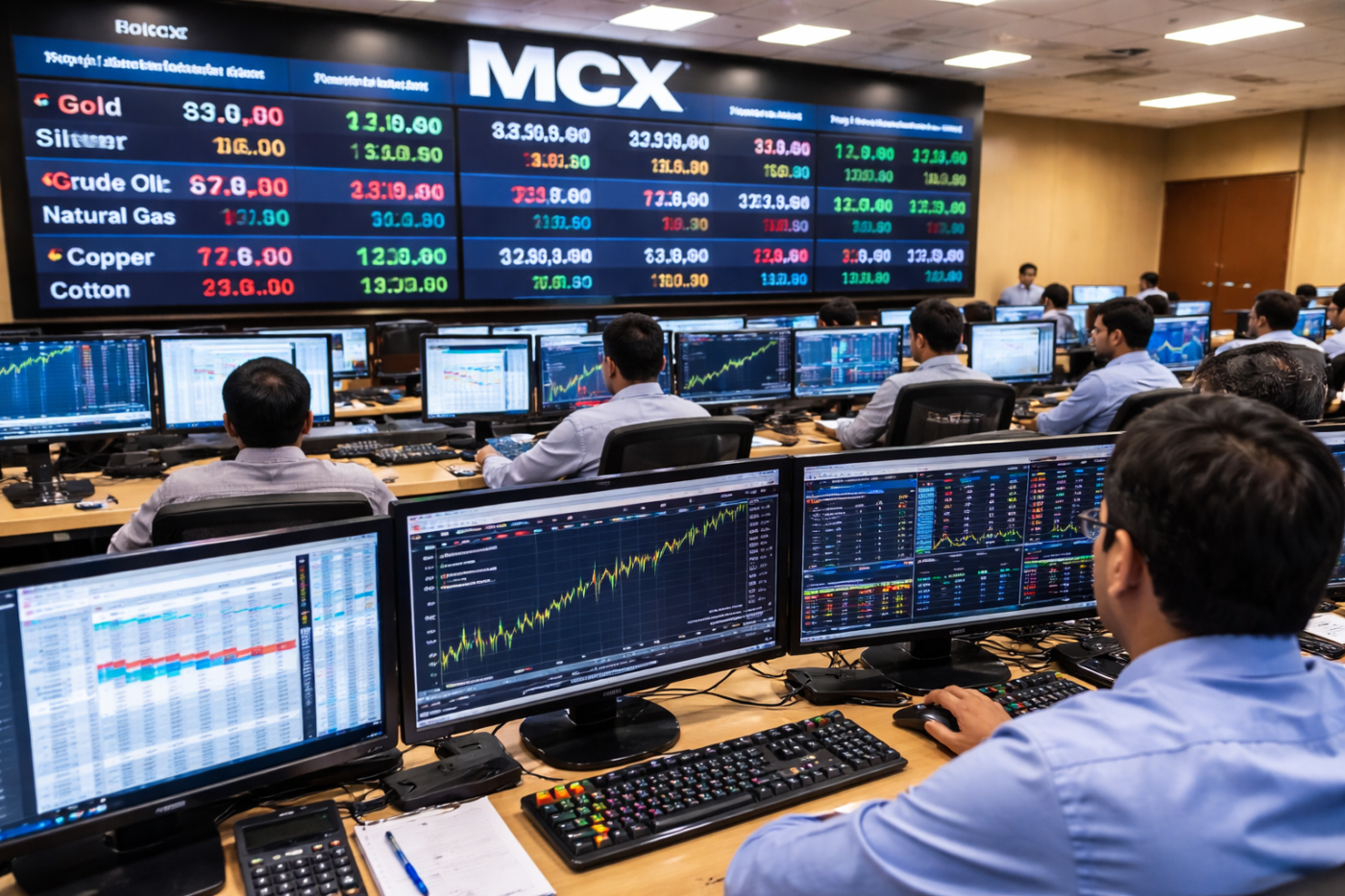
A Complete Guide to Commodity Trading and MCX
Introduction
Commodity trading plays a crucial role in global and domestic financial systems, acting as a mechanism for price discovery, hedging, and market participation across industries. In India, the primary exchange facilitating commodity derivatives trading is the Multi Commodity Exchange of India (MCX). For anyone researching MCX commodity trading, understanding how the exchange functions, how contracts work, and how pricing and settlement occur is essential.
This article provides a deeply researched, structured explanation of commodity trading in India, focusing on the operational mechanics of MCX. It is purely educational and informational, designed to clarify how the system functions without offering any investment advice or trading recommendations.
What Is MCX?
The Multi Commodity Exchange of India (MCX) is one of India’s leading commodity derivatives exchanges. Established in 2003, MCX provides a transparent electronic platform for trading commodity futures and options across multiple asset classes.
MCX operates under the regulatory framework of the Securities and Exchange Board of India (SEBI) and facilitates trading in:
- Precious metals (Gold, Silver)
- Base metals (Copper, Aluminium, Zinc)
- Energy commodities (Crude Oil, Natural Gas)
- Agricultural commodities (limited segments historically)
MCX functions as a centralized marketplace where buyers and sellers interact through standardized contracts. The exchange provides infrastructure for trading, clearing, settlement, and price dissemination.
Understanding Commodity Trading in India
What Is Commodity Trading?
Commodity trading involves buying and selling standardized contracts tied to physical commodities. These contracts are typically futures contracts, which represent an agreement to buy or sell a commodity at a specified price on a future date.
Unlike physical trade, commodity derivatives trading focuses on price movements rather than actual delivery. Participants may use the market for hedging, price discovery, or risk management.
Types of Commodities Traded
| Category | Examples |
|---|---|
| Precious Metals | Gold, Silver |
| Base Metals | Copper, Zinc, Aluminium |
| Energy | Crude Oil, Natural Gas |
| Agricultural (historically) | Cotton, Mentha Oil |
Structure of MCX Commodity Trading
MCX operates as a futures and options exchange. Understanding its structure requires examining its core components:
1. Trading Platform
MCX uses an electronic trading system accessible through registered brokers. Orders are matched automatically using price-time priority.
2. Clearing and Settlement
Trades executed on MCX are cleared through a clearing corporation, which guarantees settlement and manages counterparty risk.
3. Standardized Contracts
Each commodity contract has predefined specifications:
- Lot size
- Tick size
- Expiry date
- Margin requirements
- Delivery unit
Standardization ensures uniformity across participants.
How Commodity Contracts Work on MCX
Contract Specifications
Each MCX contract represents a specific quantity of a commodity. For example:
| Commodity | Contract Type | Typical Lot Size* |
|---|---|---|
| Gold | Futures | 1 kg |
| Silver | Futures | 30 kg |
| Crude Oil | Futures | 100 barrels |
| Copper | Futures | 1 tonne |
(*Lot sizes vary by contract and mini variants exist.)
Contracts also include expiry months. Traders may enter positions and exit before expiry or hold until settlement.
Trading Hours on MCX
MCX operates extended trading hours compared to equity markets due to alignment with global commodity markets.
| Segment | Trading Hours (approx.) |
|---|---|
| Day session | 9:00 AM – 5:00 PM |
| Evening session | 5:00 PM – 11:30 PM (or later for some commodities) |
Evening sessions allow domestic participants to react to global price movements.
Price Discovery in Commodity Trading
Commodity prices on MCX are influenced by multiple factors:
- Global supply and demand
- Currency movements (especially USD/INR)
- Interest rates
- Inventory data
- Geopolitical events
- Industrial demand
MCX prices often reflect global benchmark movements such as:
- COMEX for metals
- NYMEX for energy
- LME for base metals
The exchange acts as a localized price discovery platform aligned with global trends.
Market Participants in MCX
Commodity markets consist of different types of participants, each with distinct objectives.
1. Hedgers
Producers and consumers use futures contracts to manage price risk. For example:
- Metal manufacturers
- Oil importers
- Jewelers
2. Speculators
Participants who trade based on price expectations. Their presence adds liquidity to markets.
3. Arbitrageurs
These participants exploit price differences between markets or contracts to maintain efficiency.
4. Institutional Participants
Banks, funds, and large institutions may participate under regulatory frameworks.
Margin System in MCX
Commodity trading on MCX involves a margin-based system rather than full contract value payment.
Types of Margins
| Margin Type | Purpose |
|---|---|
| Initial Margin | Required to open a position |
| Maintenance Margin | Minimum balance to maintain |
| Mark-to-Market (MTM) | Daily profit/loss adjustment |
Margins are calculated based on volatility and risk exposure.
Mark-to-Market Settlement
All open positions in MCX futures are subject to daily mark-to-market settlement.
At the end of each trading day:
- Gains are credited
- Losses are debited
This process ensures risk control and prevents large settlement shocks at expiry.
Delivery and Settlement
Commodity contracts may be:
- Cash-settled
- Physically delivered
Most participants exit before delivery. However, MCX provides delivery infrastructure through accredited warehouses and vaults for certain commodities.
Delivery involves:
- Warehouse receipts
- Quality standards
- Delivery centers
Role of SEBI in Commodity Trading
The Securities and Exchange Board of India (SEBI) regulates commodity derivatives markets. Its responsibilities include:
- Market oversight
- Participant regulation
- Risk management rules
- Margin requirements
- Transparency standards
SEBI ensures fair practices and investor protection.
Key Terminology in MCX Commodity Trading
Understanding core terms is essential.
| Term | Meaning |
|---|---|
| Futures Contract | Agreement to buy/sell later |
| Open Interest | Total active contracts |
| Volume | Number of contracts traded |
| Tick Size | Minimum price movement |
| Expiry Date | Contract settlement date |
| Basis | Spot vs futures difference |
How Prices Move in MCX Commodities
Price movements in MCX reflect both domestic and global influences.
Key Drivers
- Dollar index changes
- Inflation data
- Industrial demand
- Weather patterns (for agri commodities)
- OPEC decisions (for oil)
- Central bank policies
Commodity markets are interconnected globally, making international developments highly relevant.
Comparison: Commodity Trading vs Stock Trading
| Feature | Commodity Trading | Stock Trading |
|---|---|---|
| Asset | Physical goods | Company shares |
| Contract type | Futures/options | Equity shares |
| Leverage | Typically higher | Moderate |
| Trading hours | Extended | Limited |
| Influences | Global macro factors | Company performance |
Technology and Trading Access
Participants access MCX through registered brokers offering:
- Trading terminals
- Mobile apps
- Web platforms
- Charting tools
- Market data feeds
Electronic trading ensures transparency and real-time execution.
Data and Analytics in Commodity Trading
Commodity markets generate extensive data used for analysis and reporting.
Common metrics:
- Price charts
- Volume trends
- Open interest
- Historical volatility
- Seasonal patterns
Such data helps understand market structure and behavior over time.
Global Linkages of Indian Commodity Markets
India’s commodity markets are connected to global supply chains. For example:
- Gold prices track international bullion markets
- Crude oil aligns with global benchmarks
- Base metals reflect industrial demand trends
Currency exchange rates play a major role in domestic pricing.
Risk Management in Commodity Markets
Commodity exchanges maintain strict risk controls:
- Margin requirements
- Position limits
- Daily price limits
- Surveillance systems
- Clearing guarantees
These mechanisms ensure stability and reduce systemic risk.
Advantages of Structured Commodity Exchanges
MCX provides:
- Transparent pricing
- Standardized contracts
- Efficient settlement
- Risk management infrastructure
- Nationwide access
It plays an important role in price discovery for Indian markets.
Frequently Asked Questions (FAQ)
What is MCX in India?
MCX is a commodity derivatives exchange that facilitates trading in futures and options contracts for metals, energy, and other commodities.
How does commodity trading work in India?
Commodity trading occurs through standardized futures contracts on regulated exchanges like MCX. Participants trade based on price movements and settlement rules defined by the exchange.
What commodities are traded on MCX?
Commonly traded commodities include gold, silver, crude oil, natural gas, copper, aluminium, and zinc.
Who regulates MCX?
MCX operates under the regulatory supervision of SEBI, which oversees commodity derivatives markets in India.
What is a commodity futures contract?
A futures contract is an agreement to buy or sell a commodity at a predetermined price on a specified future date.
What is margin in commodity trading?
Margin is the amount required to maintain a position in a futures contract. It acts as a risk management mechanism.
Understanding how MCX commodity trading works in India requires examining the structure, contracts, participants, pricing mechanisms, and regulatory environment of the commodity derivatives market. MCX serves as a central platform for price discovery and risk management across key commodities such as metals and energy products.
Commodity trading in India operates through standardized futures and options contracts, margin systems, and clearing infrastructure designed to maintain transparency and stability. Influenced by global macroeconomic factors, currency movements, and supply-demand dynamics, MCX reflects both domestic and international market trends.
As India’s financial markets evolve, the role of structured commodity exchanges remains critical in supporting industries, managing price risk, and providing a transparent trading ecosystem. A clear understanding of the operational mechanics of MCX enables better interpretation of commodity market data and developments within the broader financial system.
Disclaimer:
This article is for educational and informational purposes only and does not constitute investment advice or trading recommendations.








Leave a Comment