
Structural Differences Explained
Financial markets offer multiple avenues for participation, with commodity trading and stock trading representing two of the most widely discussed segments. While both involve price discovery, trading platforms, and regulated exchanges, their structural foundations differ significantly. Understanding these differences is critical for interpreting market behavior, reading financial data, and analyzing how capital flows through the broader economy.
In India, MCX commodity trading plays a central role in the commodity derivatives ecosystem, just as stock exchanges like NSE and BSE anchor equity markets. This article provides a deeply researched, structured comparison of commodity trading vs stock trading, focusing on operational mechanics, market structure, participants, pricing drivers, and risk frameworks. It is strictly informational and educational.
What Is Commodity Trading?
Commodity trading involves the buying and selling of standardized contracts linked to physical goods such as metals, energy resources, or agricultural products. Most commodity trading occurs through derivatives, especially futures and options contracts.
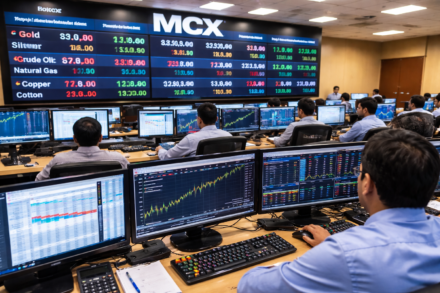
In India, the primary platform for commodity derivatives is the Multi Commodity Exchange (MCX). MCX facilitates trading in:
- Gold and silver
- Crude oil and natural gas
- Copper, zinc, aluminium
- Other commodities
These contracts represent agreements to transact at a future date at predetermined prices.
What Is Stock Trading?
Stock trading involves the buying and selling of shares in publicly listed companies. When participants trade equities, they are trading ownership stakes in businesses rather than contracts tied to physical goods.
Stock exchanges in India include:
- National Stock Exchange (NSE)
- Bombay Stock Exchange (BSE)
Stocks reflect corporate performance, earnings expectations, and broader economic conditions.
Core Structural Differences
Although both markets operate electronically and are regulated, their underlying structures differ fundamentally.
Asset Nature
| Feature | Commodity Trading | Stock Trading |
|---|---|---|
| Underlying asset | Physical goods | Company ownership |
| Value driver | Supply and demand | Corporate performance |
| Contract structure | Futures & options | Shares & derivatives |
Commodity contracts derive value from real-world supply chains. Stocks derive value from business performance and investor expectations.
Exchange Structure in India
Commodity Market Structure
The commodity derivatives market in India operates primarily through MCX. It offers:
- Standardized futures contracts
- Options contracts
- Margin-based participation
- Mark-to-market settlement
MCX connects domestic pricing to global benchmarks such as COMEX and NYMEX.
Stock Market Structure
Stock trading occurs through centralized equity exchanges. Features include:
- Real-time price matching
- Equity settlement cycles
- Dividend distribution
- Corporate governance disclosures
Equity markets represent ownership rather than contractual obligations.
Pricing Mechanisms
Commodity Price Formation
Commodity prices are influenced by:
- Global demand and supply
- Currency movements
- Inflation data
- Geopolitical developments
- Inventory levels
- Industrial demand
For example, gold prices often move in response to currency strength and macroeconomic trends.
Stock Price Formation
Stock prices reflect:
- Earnings growth
- Company fundamentals
- Sector performance
- Market sentiment
- Institutional participation
Corporate news and financial results directly affect stock prices.
Contract Structure Differences
Commodity trading typically uses futures contracts with expiry dates.
| Feature | Commodity Futures | Stocks |
|---|---|---|
| Expiry | Yes | No expiry |
| Settlement | Cash or delivery | Ownership transfer |
| Margin system | Required | Not always required |
| Leverage | Higher | Moderate |
Commodity futures require margin and daily settlement, whereas stocks represent direct ownership.
Role of Leverage and Margin
Commodity markets operate on a margin-based system. Participants deposit a fraction of the contract value to maintain positions. This structure supports liquidity but also introduces volatility sensitivity.
Stock trading may involve leverage in derivative segments, but cash equity purchases usually require full payment for shares.
Trading Hours Comparison
| Market | Typical Hours |
|---|---|
| MCX commodity market | Morning to late evening |
| Stock market | Day session only |
Commodity markets often align with global markets, leading to extended trading hours.
Settlement and Delivery
Commodity contracts can be settled in two ways:
- Cash settlement
- Physical delivery
Most positions are closed before delivery. However, delivery infrastructure exists for certain commodities.
Stock trading settles through share transfer and clearing corporations. Ownership is recorded electronically.
Market Participants
Commodity Markets
- Hedgers
- Producers
- Industrial users
- Speculators
- Arbitrageurs
Participants often use commodity markets to manage price risk.
Stock Markets
- Retail investors
- Institutional investors
- Mutual funds
- Pension funds
- Traders
Equity markets emphasize capital growth and ownership.
Risk Structure Differences
Commodity markets are influenced by:
- Weather
- Geopolitical tensions
- Supply disruptions
- Currency fluctuations
Stock markets are influenced by:
- Corporate earnings
- Economic growth
- Sector performance
- Interest rates
Both markets carry risk but respond to different variables.
Data and Analytics
Commodity trading analysis includes:
- Open interest
- Volume
- Futures curves
- Inventory data
- Seasonal patterns
Stock trading analysis includes:
- Earnings reports
- Balance sheets
- Price-to-earnings ratios
- Market capitalization
Each market uses distinct analytical frameworks.
Regulatory Framework
In India:
- Commodity derivatives are regulated by SEBI
- Stock markets are also regulated by SEBI
However, the compliance structure differs due to the nature of underlying assets.
Role of MCX in Commodity Trading
MCX provides:
- Electronic trading infrastructure
- Standardized contracts
- Clearing and settlement
- Price dissemination
It connects domestic markets to global commodity pricing.
Liquidity and Market Depth
Stock markets typically have higher retail participation. Commodity markets often see participation from hedgers and institutional players.
Liquidity varies by commodity and contract type.
Taxation and Accounting (Overview)
Commodity derivatives and equity trading may fall under different tax classifications depending on regulatory guidelines and participant status. This influences accounting treatment and reporting.
Strategic Use Cases
Commodity markets are commonly used for:
- Hedging price risk
- Price discovery
- Macro analysis
Stock markets are commonly used for:
- Ownership participation
- Capital appreciation
- Portfolio diversification
Key Structural Comparison Table
| Parameter | Commodity Trading | Stock Trading |
|---|---|---|
| Underlying | Physical goods | Companies |
| Contract type | Futures/options | Shares |
| Expiry | Yes | No |
| Price drivers | Global supply-demand | Corporate performance |
| Margin system | Mandatory | Optional |
| Trading hours | Extended | Limited |
| Delivery | Possible | Not applicable |
Expert Insights
Market analysts often highlight that commodity and equity markets serve complementary roles in financial systems. Commodity markets facilitate price discovery for raw materials essential to industrial production, while stock markets channel capital into corporate growth.
Understanding the structural differences between these markets allows participants and observers to interpret data more effectively and contextualize price movements within broader economic frameworks.
FAQ
What is MCX commodity trading?
MCX commodity trading refers to the trading of standardized commodity derivatives contracts on the Multi Commodity Exchange of India.
How is commodity trading different from stock trading?
Commodity trading involves contracts tied to physical goods, while stock trading involves ownership shares in companies.
What drives commodity prices?
Commodity prices are influenced by global supply-demand dynamics, currency movements, and macroeconomic factors.
What drives stock prices?
Stock prices are influenced by corporate performance, earnings expectations, and investor sentiment.
Can commodities involve physical delivery?
Some commodity contracts allow delivery, though most are settled before expiry.
Conclusion
Commodity trading and stock trading operate within the same financial ecosystem but are structurally distinct. Commodity markets, particularly MCX commodity trading in India, revolve around standardized contracts linked to physical goods and influenced by global supply-demand dynamics. Stock markets, by contrast, focus on corporate ownership and company performance.
Understanding these structural differences helps clarify how prices move, how contracts function, and how participants interact across financial markets. While both markets provide mechanisms for price discovery and risk management, their underlying assets, settlement structures, and driving forces remain fundamentally different.
Disclaimer:
This article is for informational and educational purposes only and does not constitute investment advice or trading recommendations.