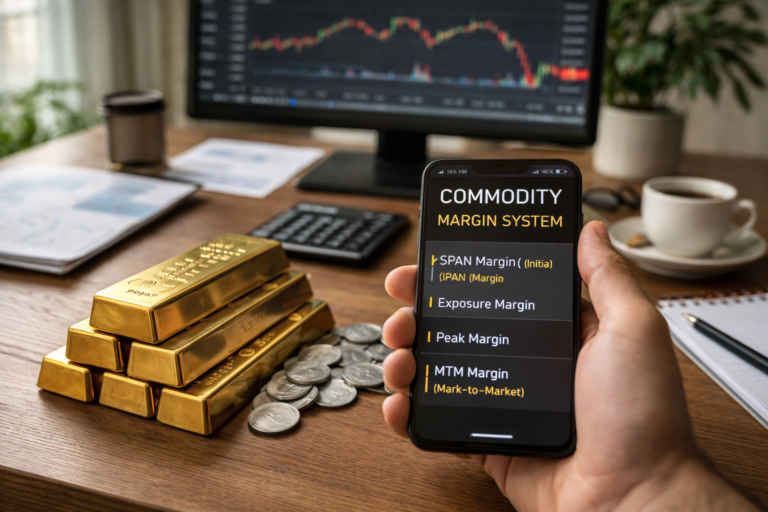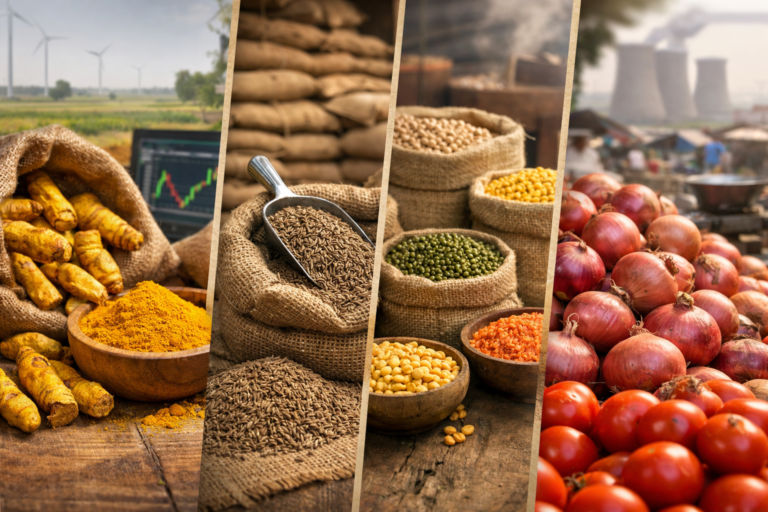
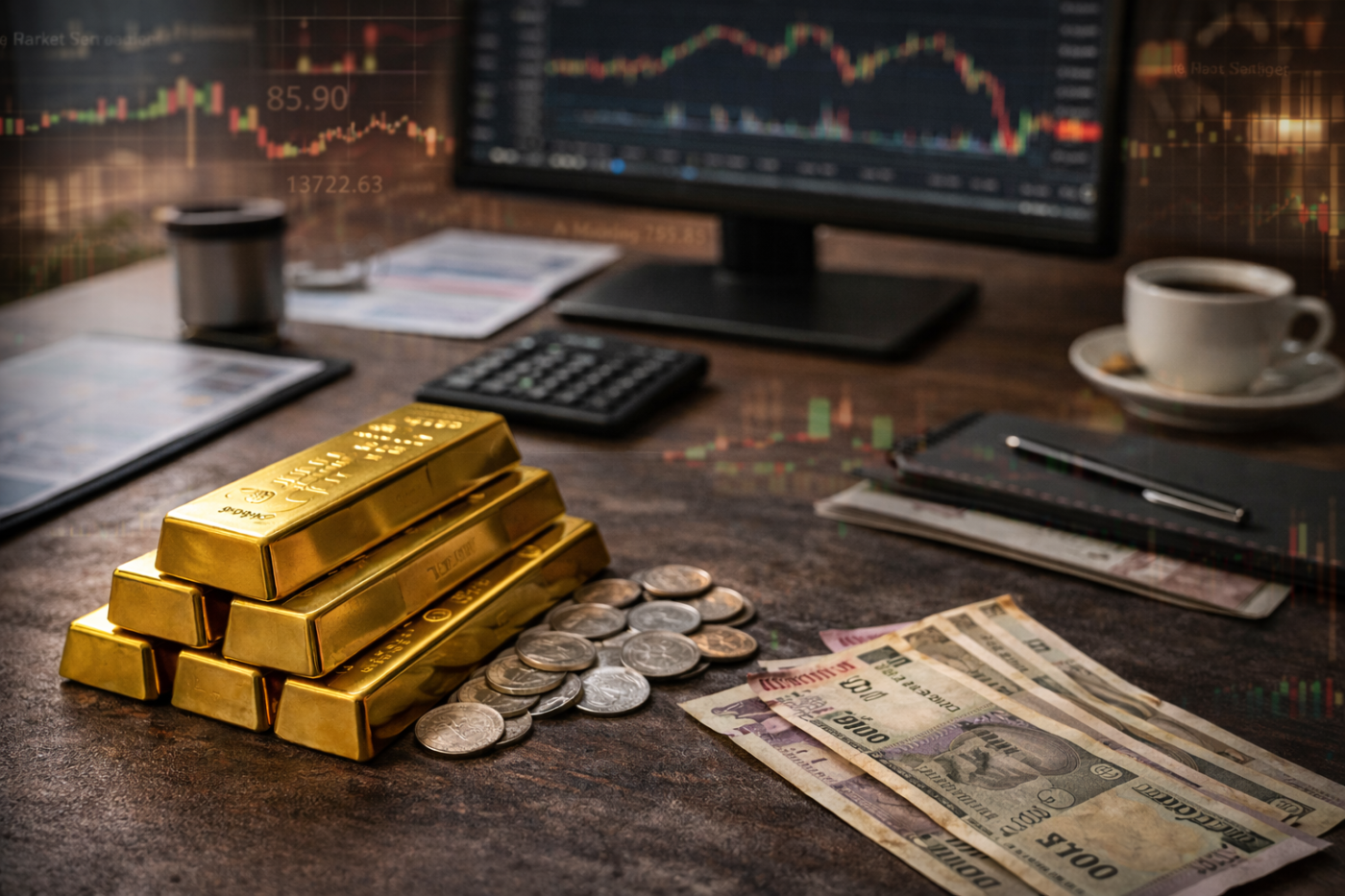
India’s commodity markets have evolved from fragmented physical mandis and bullion hubs into a structured derivatives ecosystem regulated by SEBI and anchored by exchanges like MCX and NCDEX. The commodity market size in India has expanded significantly over the last decade, driven by rising participation from retail traders, hedgers, institutions, and algorithmic systems.
Today, commodity derivatives are not just tools for hedging but also active trading instruments influencing price discovery across metals, energy, and agricultural commodities. With inflation cycles, currency volatility, and global supply disruptions shaping commodity trends, India’s market size and participation depth have grown steadily.
This article examines the size of India’s commodity market, its growth trajectory, structural composition, and what lies ahead.
Commodity Market Size in India: Current Snapshot
India is among the top global commodity consumers across:
- Gold
- Crude oil
- Base metals
- Agricultural commodities
The derivatives market allows participants to hedge and speculate on these underlying commodities.
Estimated Market Size Overview
| Segment | Estimated Annual Turnover |
|---|---|
| Commodity derivatives | ₹180–220 lakh crore |
| MCX share | ~85–90% of total |
| Agri derivatives | ₹15–20 lakh crore |
| Bullion trading share | Highest volume |
Figures are indicative market estimates based on exchange turnover trends.
The commodity derivatives turnover in India has crossed several hundred trillion rupees annually, making it a significant component of the broader financial markets.
MCX: India’s Largest Commodity Exchange
The Multi Commodity Exchange (MCX) dominates India’s commodity derivatives space, especially in metals and energy.
Key Characteristics
- Largest commodity exchange in India
- Major share in bullion and energy contracts
- High liquidity in gold, silver, crude oil
MCX volumes often reflect macroeconomic sentiment, currency movement, and global commodity cycles.
Segment-Wise Market Composition
India’s commodity market can be broadly divided into three segments.
1. Bullion (Gold and Silver)
Bullion accounts for a large portion of trading value due to India’s cultural and financial affinity for gold.
| Commodity | Market Share |
|---|---|
| Gold | Very high |
| Silver | High |
| Platinum | Limited |
Gold futures and options dominate MCX turnover.
2. Energy Commodities
Energy contracts such as crude oil and natural gas attract high trader participation due to volatility and global linkage.
| Commodity | Liquidity Level |
|---|---|
| Crude Oil | Very high |
| Natural Gas | Moderate |
These contracts see strong participation from short-term traders.
3. Agricultural Commodities
Agri derivatives include:
- Soybean
- Cotton
- Chana
- Mentha oil
Agri trading volumes fluctuate based on government policies and seasonal cycles.
Growth Drivers of Commodity Market in India
Several structural factors have contributed to market expansion.
1. Financialization of Commodities
Commodities are now treated as financial assets rather than purely physical goods.
2. Retail Participation
Retail traders have increased participation due to:
- Online trading platforms
- Lower entry barriers
- Education and awareness
3. Hedging Demand
Businesses use futures to hedge raw material costs, especially in:
- Jewellery
- Oil
- Manufacturing
Historical Growth Trend
Over the past decade, the commodity market has seen cyclical but steady expansion.
| Period | Trend |
|---|---|
| 2010–2015 | Rapid growth |
| 2016–2019 | Regulatory tightening |
| 2020–2022 | Volatility-driven rise |
| 2023–2026 | Retail expansion |
Volatility during global events often boosts commodity trading volumes.
India vs Global Commodity Markets
| Region | Market Characteristic |
|---|---|
| US | Highly institutional |
| China | Physical + futures mix |
| India | Retail + hedger driven |
India’s market is still evolving toward deeper institutional participation.
Participation Structure
India’s commodity market participants include:
- Retail traders
- Hedgers (jewellers, refiners, manufacturers)
- Proprietary trading firms
- Algorithmic traders
Institutional participation remains relatively lower compared to developed markets but is gradually increasing.
Role of Regulation
SEBI regulates commodity derivatives in India. Key regulatory steps include:
- Peak margin rules
- Position limits
- Risk management frameworks
- Transparency requirements
These measures have strengthened market stability and credibility.
Technology and Market Expansion
Technology has played a major role in expanding the commodity market size in India.
Key Enablers
- Mobile trading apps
- Algorithmic trading
- Data analytics tools
- Real-time margin reporting
Digital access has significantly increased retail participation.
Market Challenges
Despite growth, certain challenges remain.
Key Issues
- Limited institutional participation
- Regulatory restrictions in agri markets
- Volatility risk
- Low awareness in smaller cities
However, education and digital penetration are gradually addressing these gaps.
Future Outlook: Commodity Market Size in India
The Indian commodity market is expected to grow due to:
- Rising inflation hedging demand
- Expansion of options trading
- Increased hedger participation
- Integration with global markets
Experts expect deeper liquidity and broader product offerings over the next decade.
Practical Interpretation for Market Participants
For Traders
Growing market size means:
- Better liquidity
- More opportunities
- Tighter spreads
For Businesses
Commodity futures help:
- Hedge input costs
- Manage risk
- Improve price predictability
For Investors
Commodities can act as:
- Inflation hedge
- Portfolio diversifier
FAQ: Commodity Market Size in India
How large is India’s commodity market?
Annual turnover in derivatives exceeds ₹180 lakh crore.
Which exchange dominates?
MCX holds the largest market share.
Which commodity has highest volume?
Gold futures lead in turnover.
Is participation increasing?
Yes, especially among retail traders.
Is the market regulated?
Yes, by SEBI.
Will the market grow further?
Growth is expected due to digital participation and hedging demand.
Market Perspective: Why This Matters in 2026
In 2026, commodities are increasingly linked to global macro trends—interest rates, inflation, and geopolitical risks. As India integrates deeper into global trade and finance, commodity derivatives will play a larger role in price discovery and risk management.
The commodity market size in India is not just expanding in volume but also in sophistication. Options trading, algorithmic participation, and institutional hedging are likely to drive the next phase of growth.
Conclusion
India’s commodity market has transformed into a structured, technology-driven ecosystem with significant trading turnover and growing participation. While still evolving compared to global leaders, the trajectory remains upward.
Understanding the size and structure of this market helps traders, investors, and businesses navigate risk and opportunity more effectively. As liquidity deepens and participation broadens, commodities will remain central to India’s financial landscape.
Disclaimer
This content is for informational and educational purposes only and does not constitute financial or investment advice.